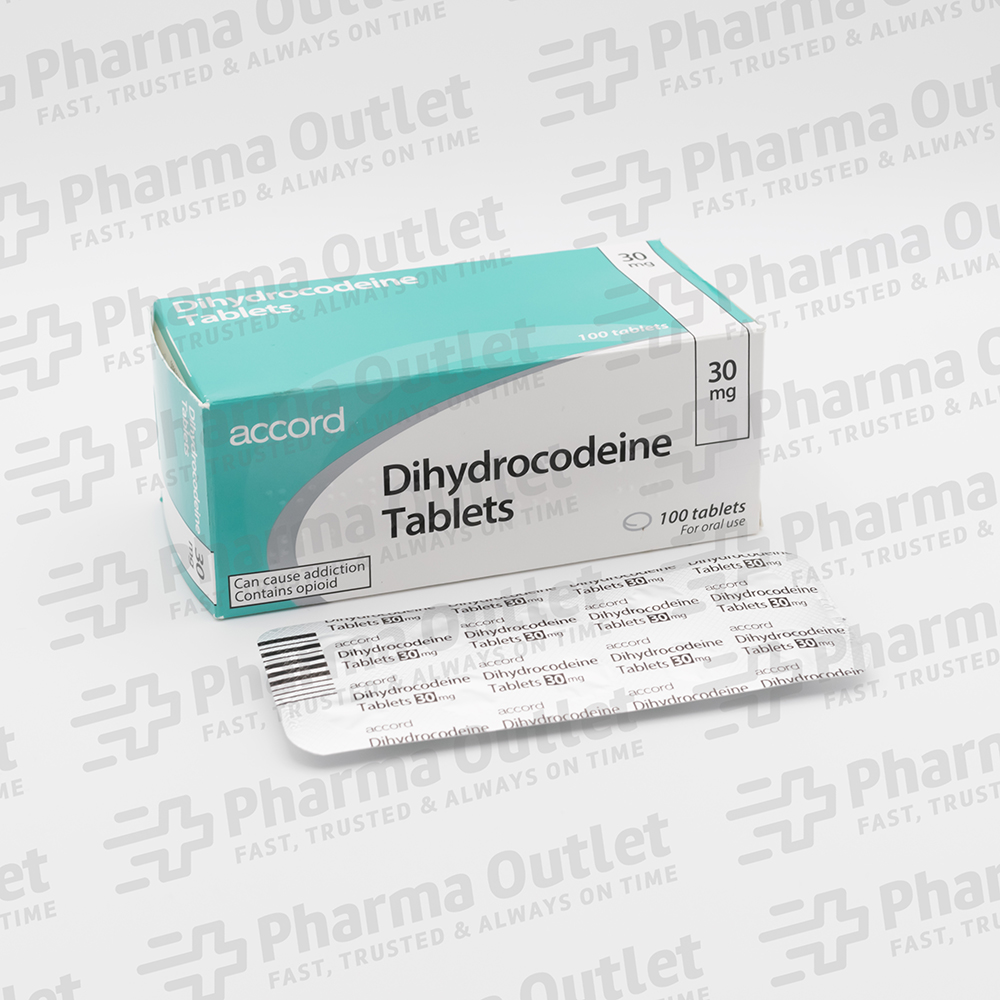
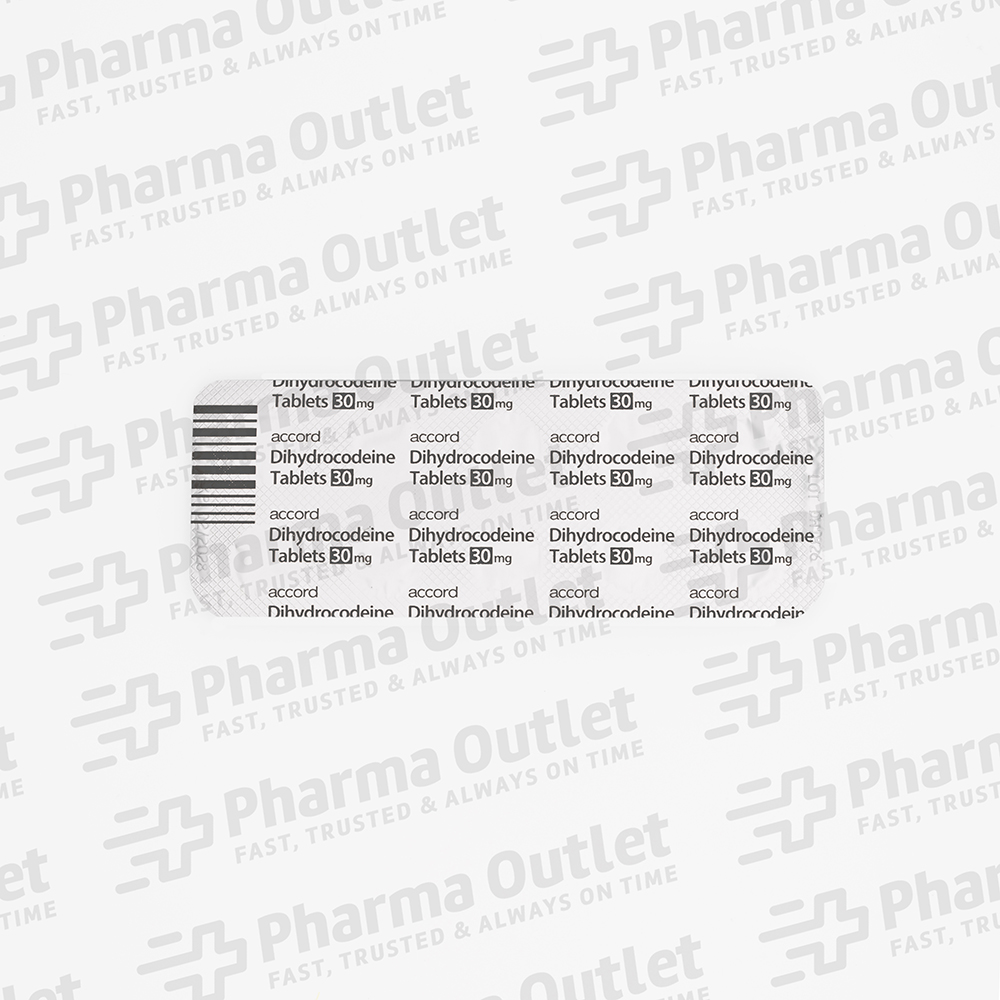




Dihydrocodeine 30mg Tablets (Accord) are a prescription-only pain relief medication used for the management of moderate to severe pain when standard painkillers like paracetamol, ibuprofen, or aspirin are not effective on their own.
Belonging to the opioid analgesic family, Dihydrocodeine works by altering the way the body and brain respond to pain signals, providing effective relief for conditions such as post-surgical pain, severe back pain, joint pain, nerve pain, and injuries.
Each box contains 100 tablets of 30mg strength, ensuring a consistent supply for patients who require ongoing pain management under medical supervision.
This medication may also be prescribed in some cases for shortness of breath related to severe lung conditions, but its main use remains pain control.
1. What is Dihydrocodeine used for?
Dihydrocodeine is prescribed for the relief of moderate to severe pain, especially when other painkillers are not effective.
2. How should I take Dihydrocodeine tablets?
Take as directed by your doctor, usually every 4–6 hours, with or without food. Do not exceed the prescribed dose.
3. How quickly does Dihydrocodeine work?
It typically starts working within 30–60 minutes, with pain relief lasting up to 4–6 hours.
4. Can I become addicted to Dihydrocodeine?
Yes. Long-term or excessive use can lead to dependence or addiction. Always follow medical advice and do not exceed the recommended dose.
5. Can I drink alcohol while taking Dihydrocodeine?
No. Mixing alcohol with Dihydrocodeine increases the risk of dangerous side effects such as drowsiness, breathing difficulties, and overdose.
6. What are the possible side effects?
Common side effects may include drowsiness, constipation, dizziness, nausea, or dry mouth. Serious side effects should be reported to a doctor immediately.
7. Who should not take Dihydrocodeine?
It should not be taken by people with severe breathing problems, head injuries, liver failure, or those allergic to opioids. Always consult your doctor before use.
8. How is Dihydrocodeine different from Codeine?
Dihydrocodeine is generally considered stronger and more effective than standard codeine, making it better suited for persistent or more severe pain.